
01
Colloidal Quantum Dot SWIR Detection
Core Question
How can solution-processed PbS quantum dots deliver low dark current, strong carrier extraction, and stable short-wave infrared response?
Our Approach
Ligand exchange, interfacial layers, hybrid-size transport strategies, and process routes that tune band alignment and suppress leakage paths.
Representative Outcome
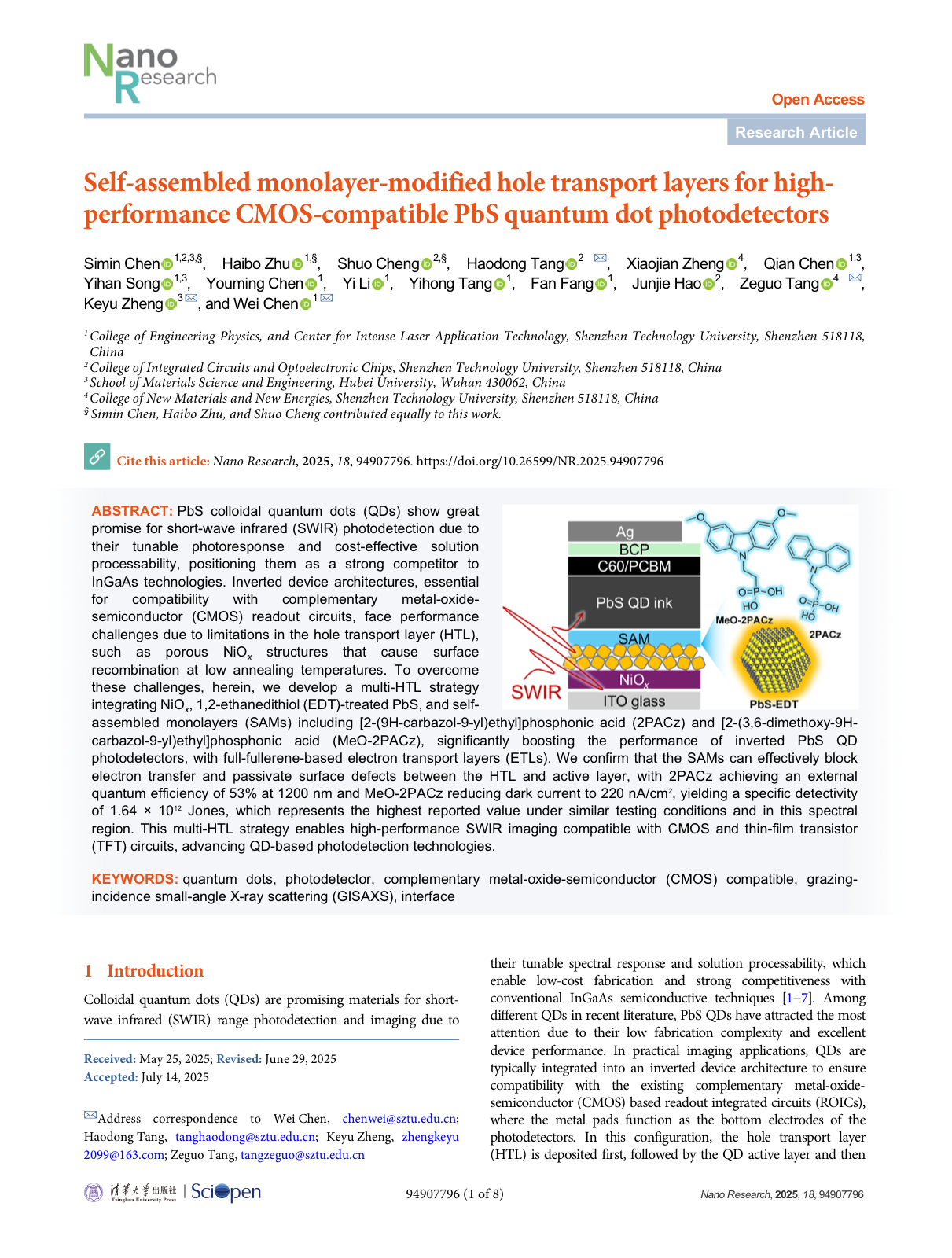
Recent work advances inverted PbS QD photodetectors, interface-enhanced smoke detection, and SWIR devices with improved transport layers.
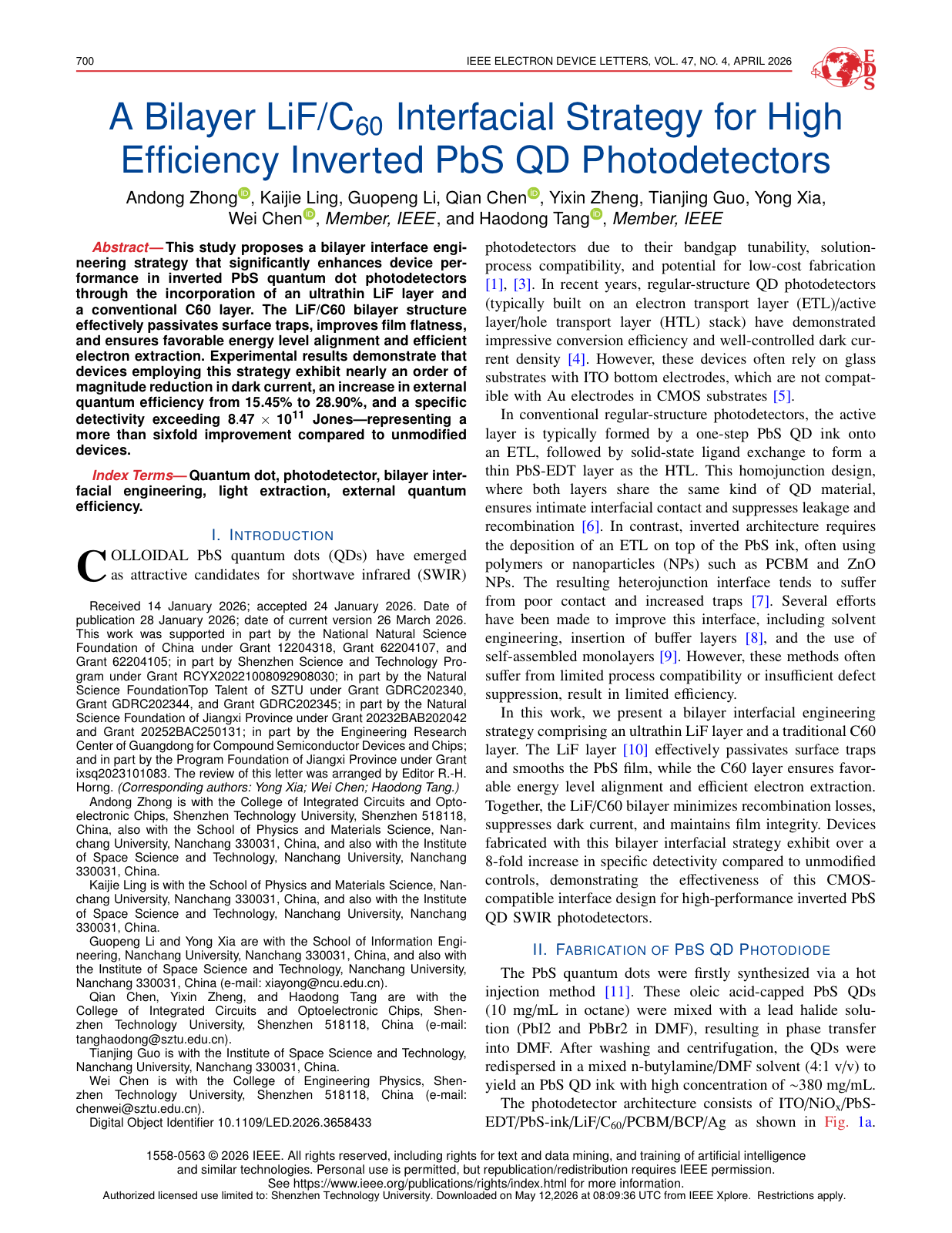 Bilayer LiF/C60 Interfacial StrategyIEEE EDL · 2026DOI
 Size Effects Of EDT-Treated PbS QDsJPCL · 2025DOI
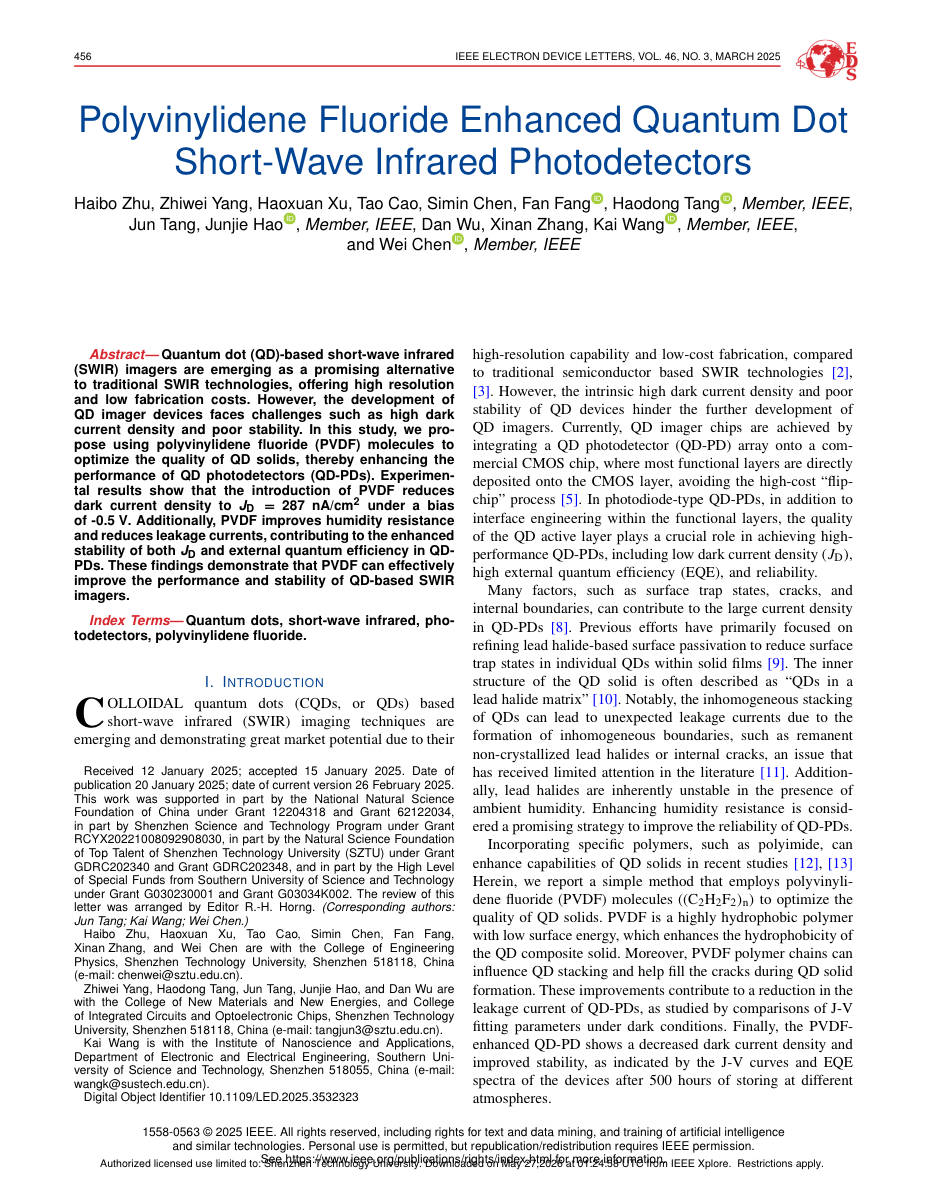 PVDF Enhanced QD SWIR PhotodetectorsIEEE EDL · 2025DOI
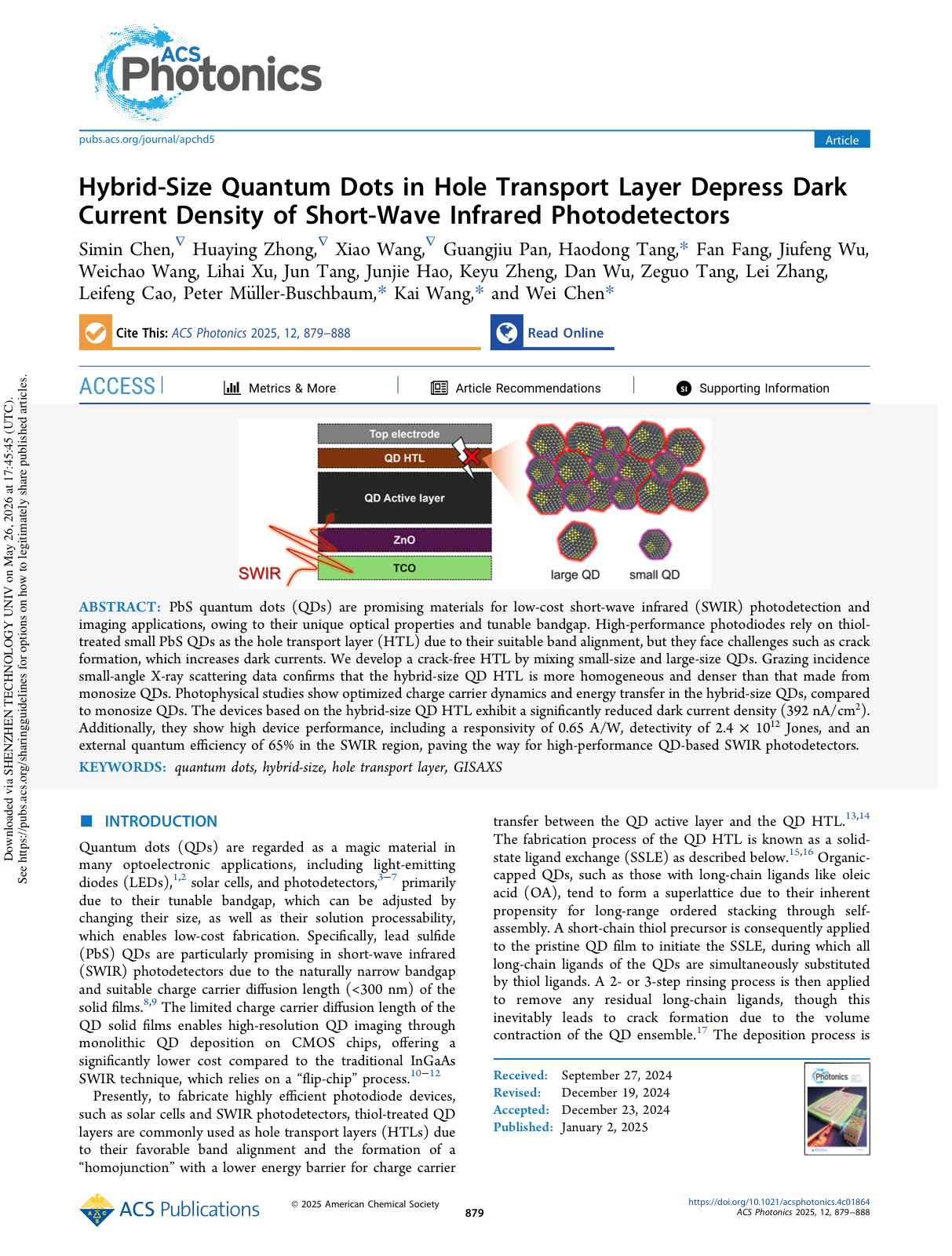 Hybrid-Size QDs Depress Dark CurrentACS Photonics · 2025DOI
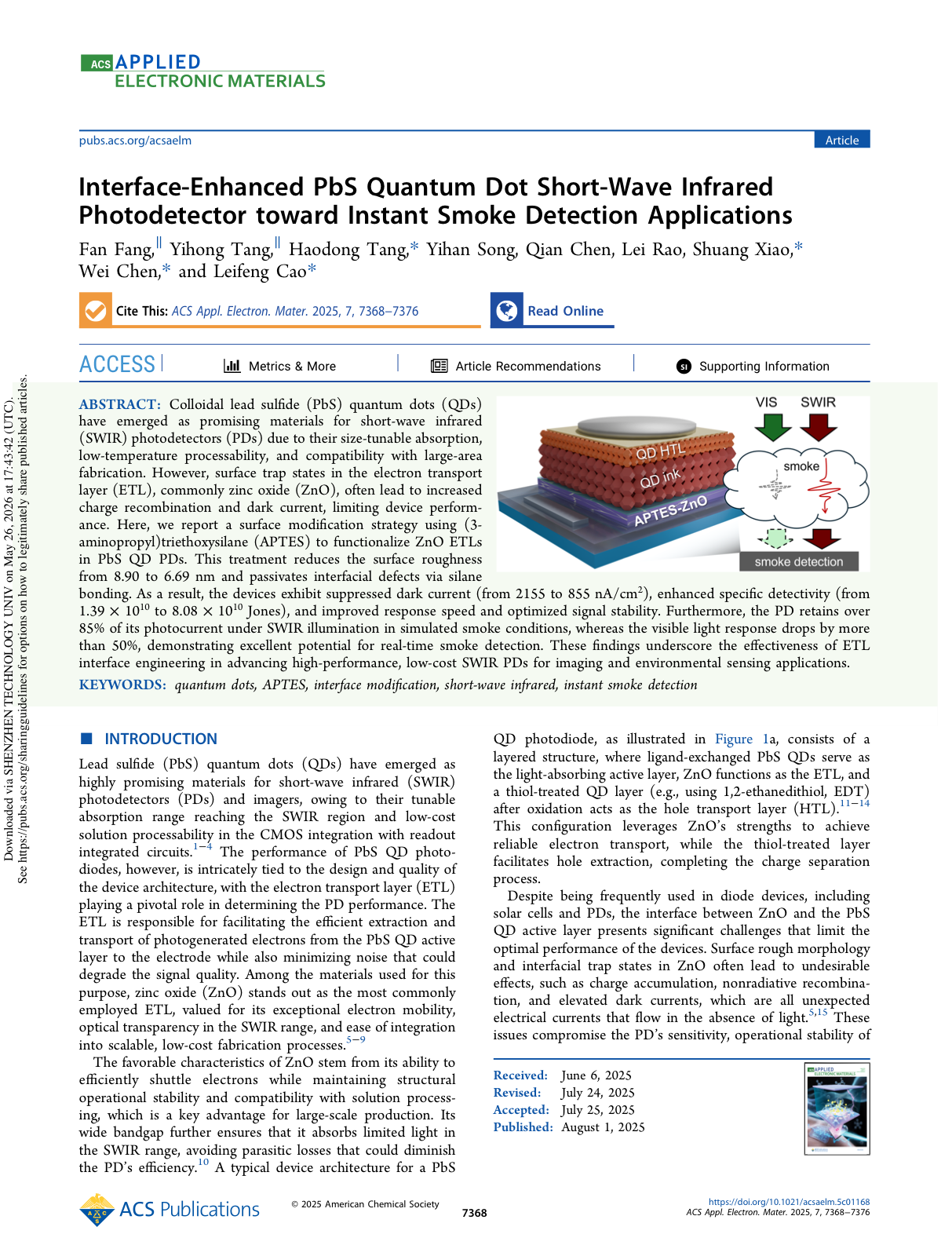 SWIR Photodetector For Smoke DetectionACS AELM · 2025DOI
 Suppressing Dark Current In PbS QD SWIR PDsIEEE EDL · 2025DOI
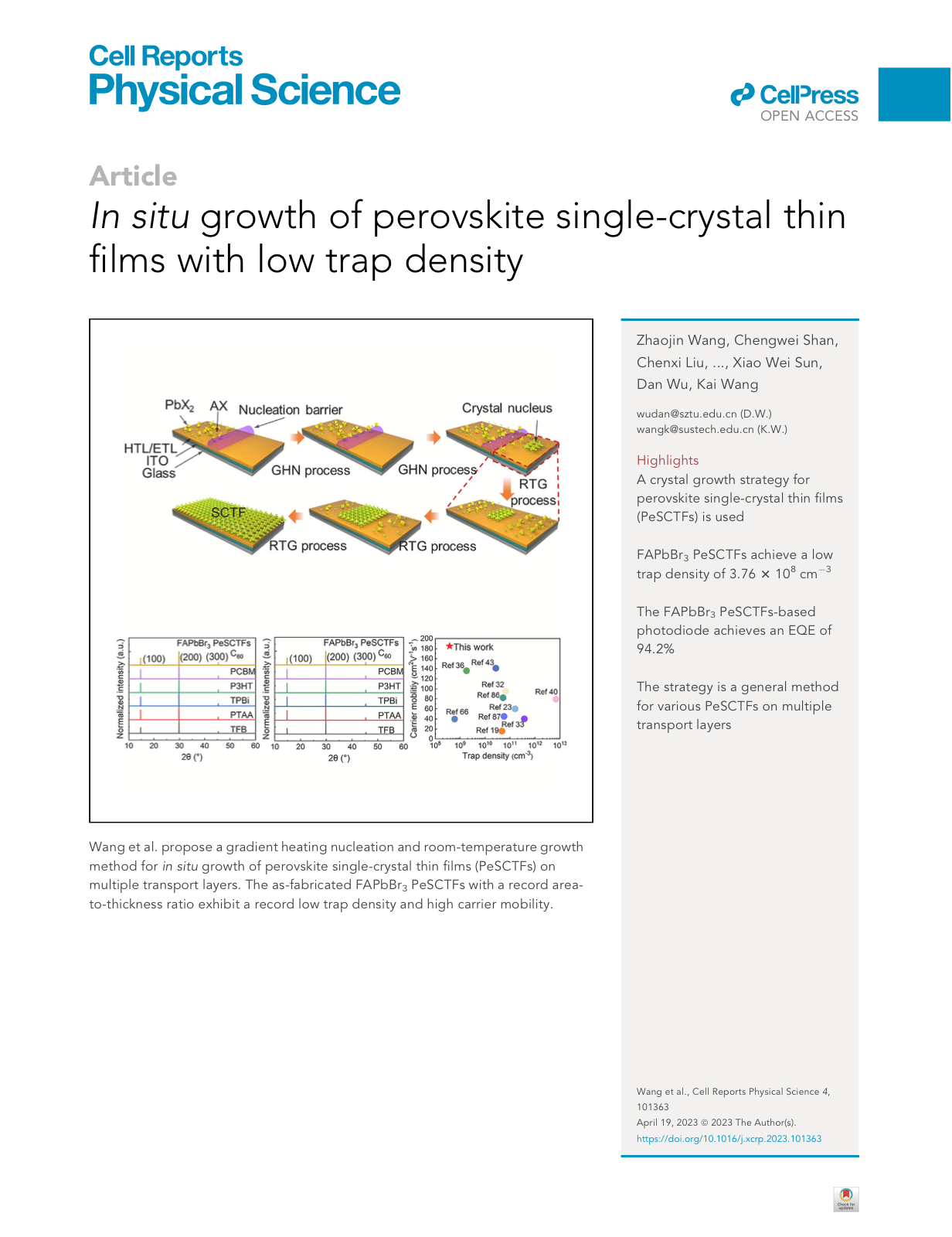 Perovskite Single-Crystal Thin Films
 Perovskite Nanocrystals To PbS QDs
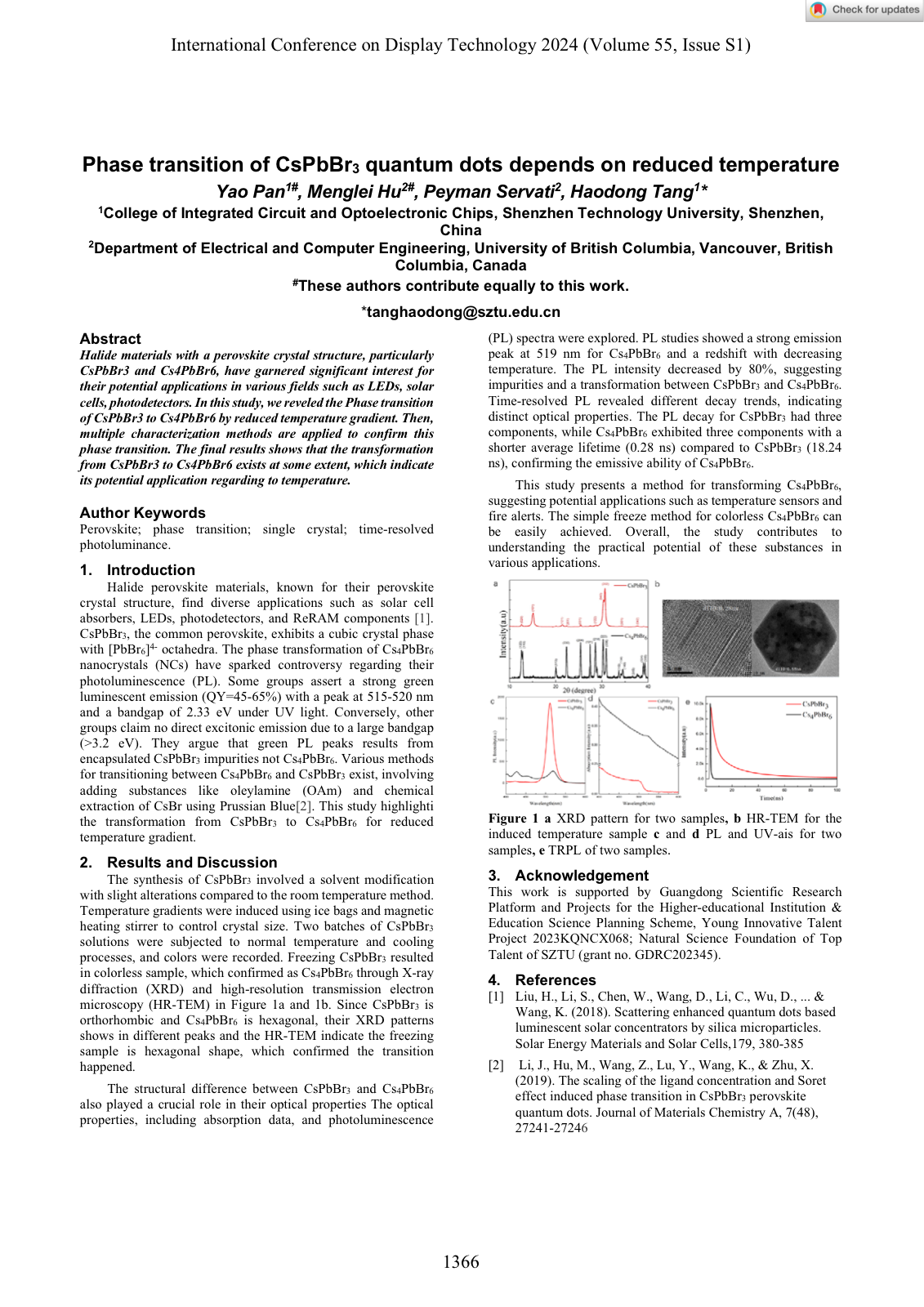 CsPbBr3 Phase Transition
 Low-Dimensional Optoelectronic Materials
 QD LED-On-Silicon Microdisplay
 Spray-Deposited PbS QD Solids
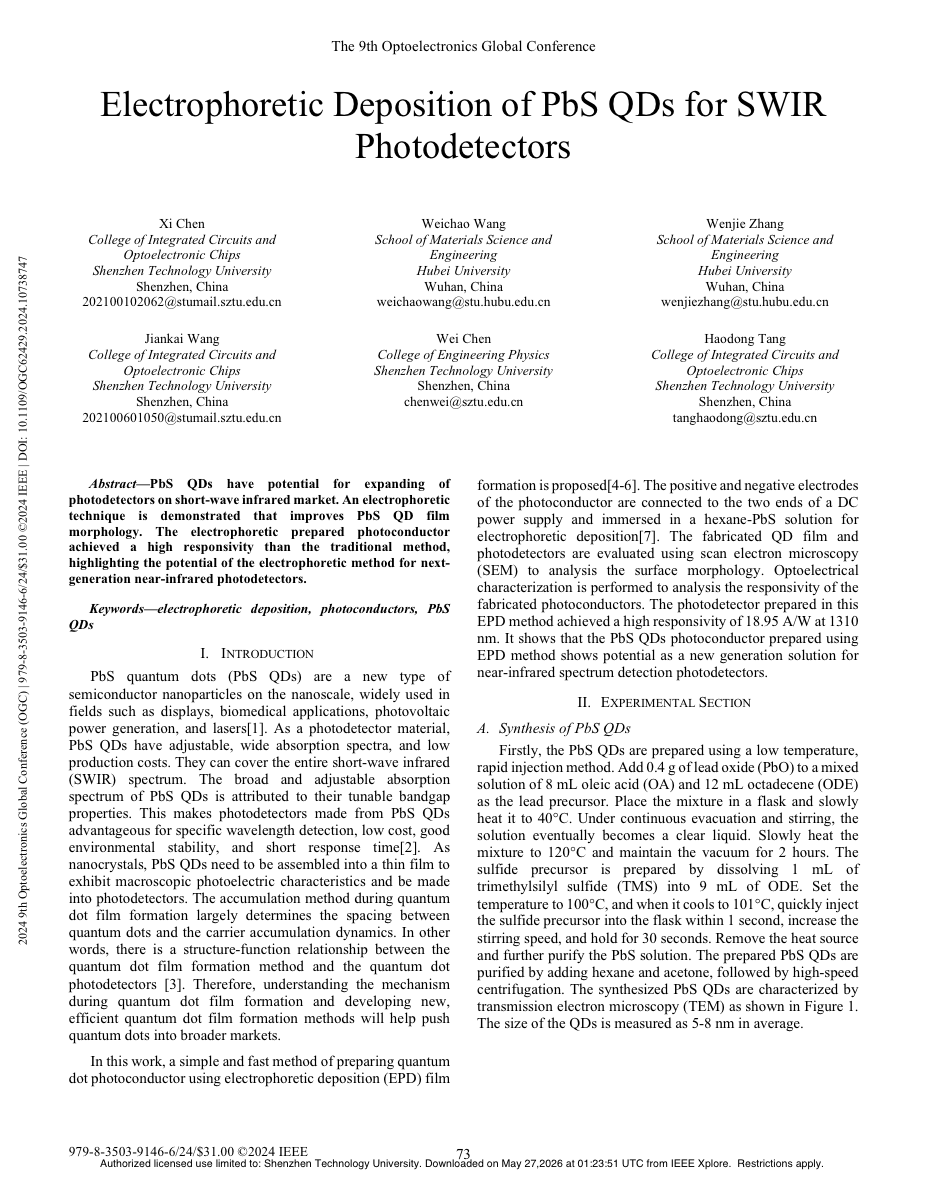 Electrophoretic Deposition For SWIR PDs
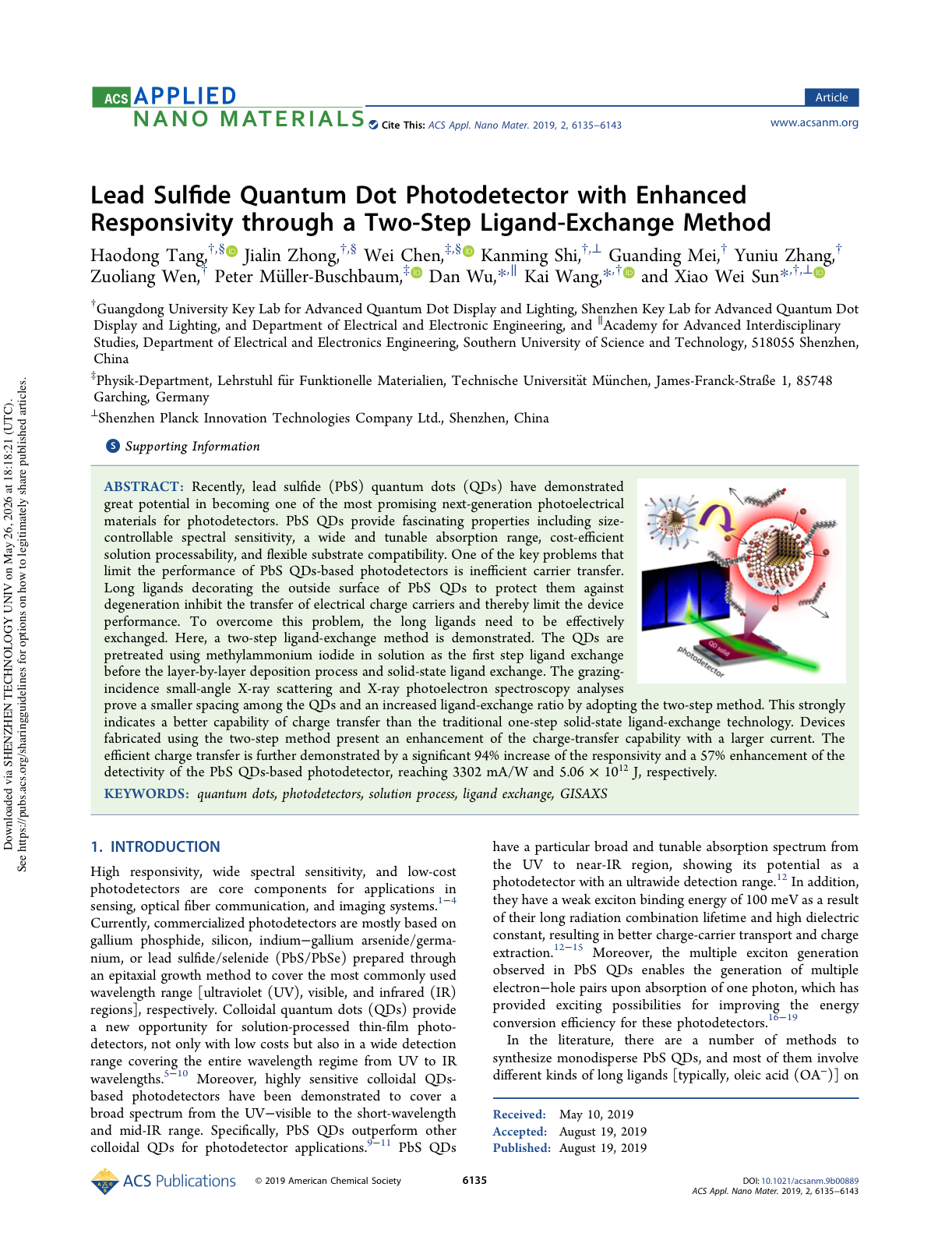 Enhanced Responsivity PbS QD PDs
 Display And Pixel Integration
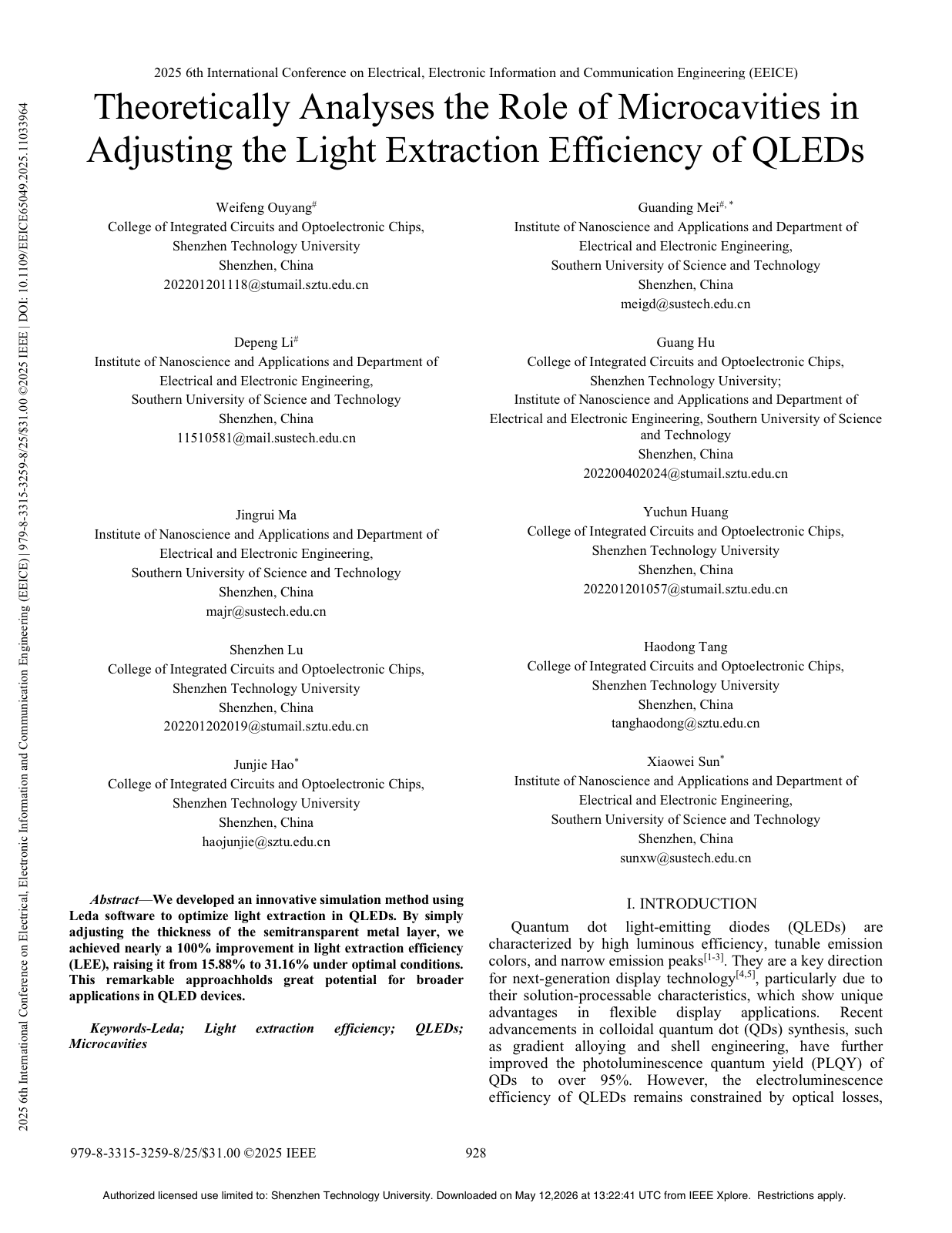 Device Integration Workflow
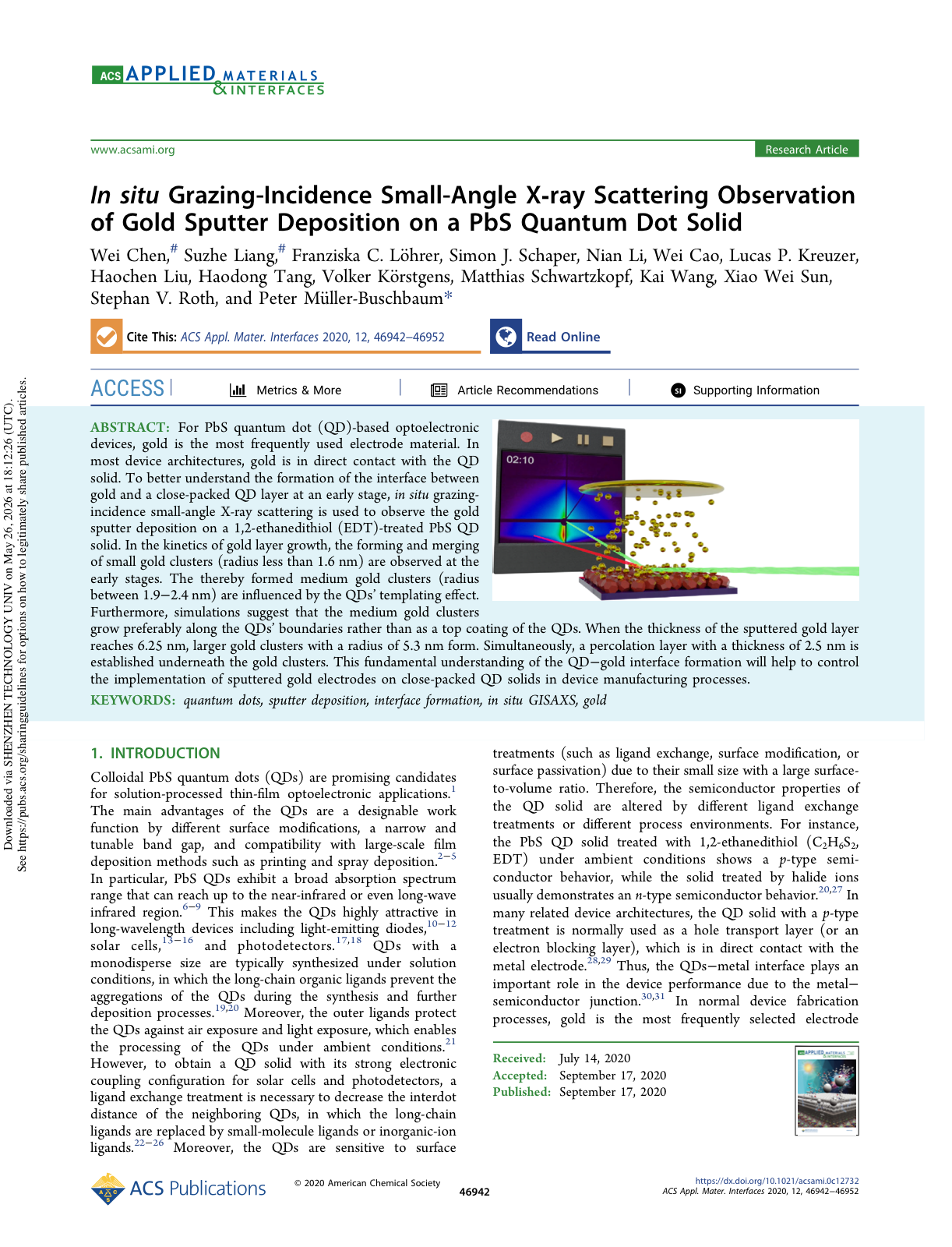 QD-Gold Interface Formation