Undergraduate Co-First-Author Paper Published in ACS Applied Nano Materials
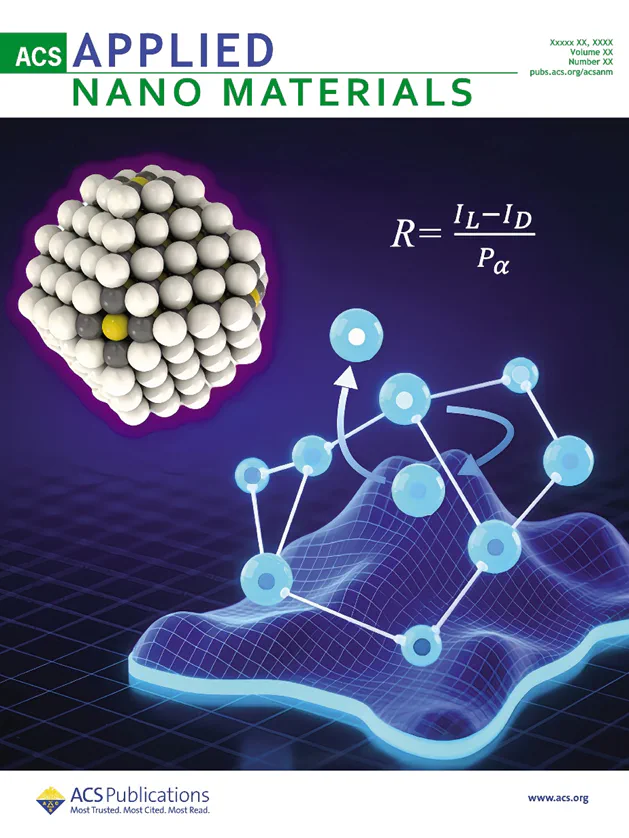
Congratulations to Jiankai Wang and Lei Rao on their ACS Applied Nano Materials paper and cover art selection.
Jiankai Wang and Lei Rao, undergraduate students from the College of Integrated Circuits and Optoelectronic Chips, published a research article as co-first authors in ACS Applied Nano Materials. The paper, “A Search-and-Verification Framework for Efficient Annealing Optimization in PbS Quantum Dot Films”, was also selected as the issue cover art.
Research Background
Solution-processed semiconductors like quantum dots and perovskites are emerging as key materials for next-generation optoelectronic devices due to their low cost, low-temperature processing, and tunable bandgaps. Among them, PbS quantum dots (QDs) stand out for their strong response in the short-wave infrared (SWIR) region, offering promising applications in surveillance, biomedical imaging, and remote sensing.
However, optimizing the annealing process—a critical step that influences film crystallinity, defect density, and carrier mobility—remains a major challenge. Traditional parameter tuning methods, such as single-variable optimization or full factorial designs, are often inefficient and prone to missing global optima.
Research Highlights
This work introduces a novel “Search-and-Verification” annealing optimization framework (ACO-HC) tailored for low-dimensional parameter spaces. By combining Ant Colony Optimization with Hill Climbing and integrating real-time experimental feedback, the framework achieves high-resolution (1 °C, 1 min) adaptive tuning. Remarkably, it improves device responsivity by 265% while reducing the number of experiments by 99%.
Multimodal structural characterizations (AFM, SEM, XRD) confirmed that enhanced device performance is primarily due to reduced surface roughness, leading to more efficient carrier transport and photoelectric conversion.
Notably, the proposed framework is generalizable and model-independent, making it applicable to a wide range of materials (quantum dots, perovskites, polymer semiconductors) and devices (photodetectors, solar cells, TFTs). This offers a versatile solution for transitioning from “experience-driven” to “data-driven” process design in low-dimensional material systems.
Paper Information
Co-first authors: Jiankai Wang and Lei Rao (undergraduate students, ICOC)
Corresponding author: Dr. Haodong Tang, Assistant Professor
This work reflects the group’s undergraduate research training in materials processing, device optimization, and data-driven experimental design.
We look forward to seeing more students contribute to publishable research through careful experiments and sustained project work.
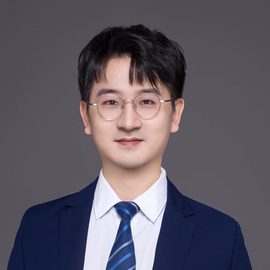
Haodong TANG
Assistant Professor
My research interests include optoelectronic devices, colloidal quantum dots and CMOS image sensors.